Welcome back to Heirloom Recipes. The Ironclad series that explores the favourite meals of history’s most fascinating figures. Everyday dishes that give us a glimpse of the real people inside extraordinary lives.
We’ve tasted Tolstoy’s lemony moral crisis. Stoked the fire with Johnny Cash. Flipped burgers with Hemingway. Today, we dine with the impeccably glamorous Audrey Hepburn.
While Audrey had breakfast at Tiffany’s, she preferred dinner at home.
In the evenings, the woman once described as “the most photographed woman in the world” enjoyed cooking with her son Luca, a precious ritual he documented in his book Audrey at Home: Memories of My Mother’s Kitchen.
This moment of grounding is a common theme in this series. Without a daily reminder of who you really are, fame can swallow you whole.
But the deeper we dug into the origins of Audrey’s recipe, the more the sparse ingredients revealed.
Before she was Audrey, she was Edda.
And before she was Edda, she was Audrey.
Let me explain.
In May 1940, when she was eleven, the Nazis occupied her native Holland. Suddenly, “Audrey” sounded very British. And British was not the vibe.
Her father was an English banker. Her mother was a Dutch baroness. Both navigating an unknown Europe.
Her mother moved in fascist circles. Fascist circles are like regular circles, only more angry. When the occupation began, she had her daughter use a name that felt a little safer. Edda van Heemstra.
Sadly, the decision didn’t protect her daughter from what was to come.
Audrey learned almost immediately that a name, a title, even wealth can be removed overnight.
What became known as the Hunger Winter blew in. Food supplies evaporated. Comforts were burned for warmth. Tulip bulbs were ground into flour. Nettles boiled. Anything that could pass for food was eaten.
In her earliest years, Audrey saw what remains when everything is taken.
Years later, even as an icon synonymous with luxury, she returned to a small ritual at the end of the day.
Tomatoes. Olive oil. Pasta.
Nothing gilded.
Dignity over glamour.
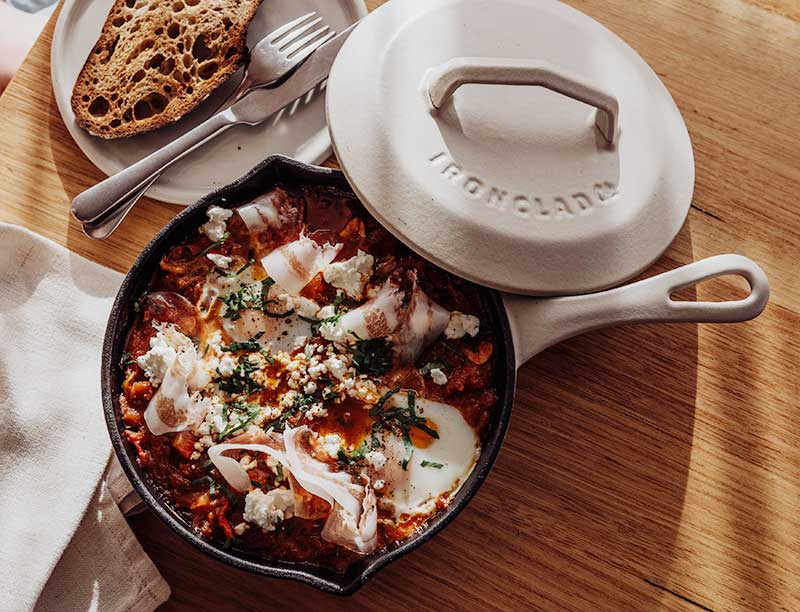
This recipe comes from Audrey’s own kitchen, recorded by her son Luca in Audrey at Home. We’ve honoured it here, cooking it our way in the Old Dutch.
I had to reread Luca’s notes twice to be sure you really do add the vegetables whole.
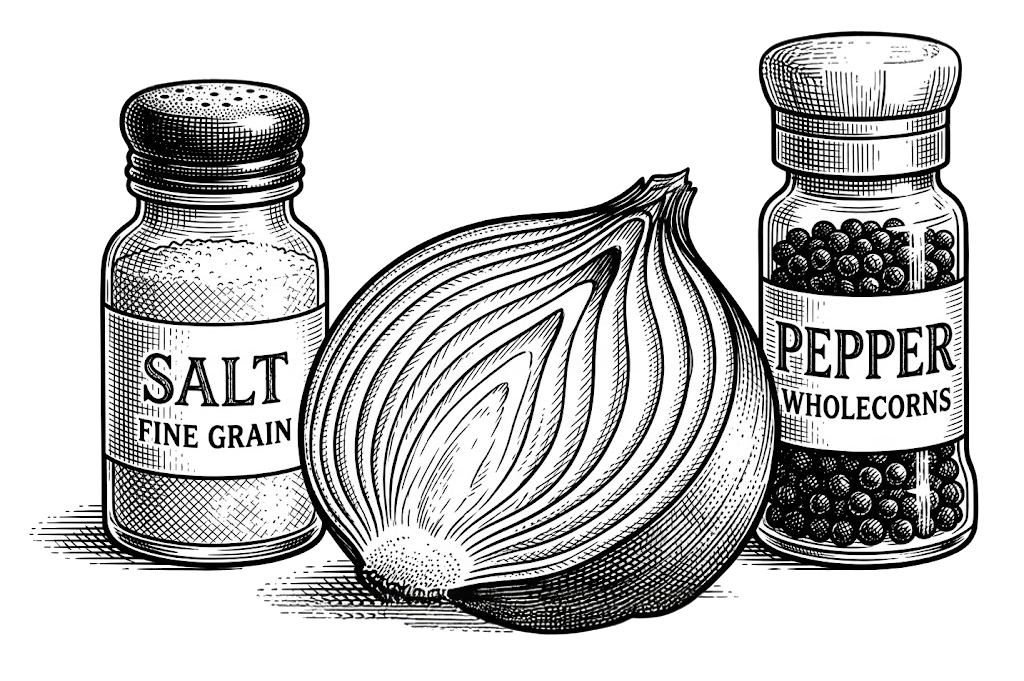
The onion goes in whole.
The carrot goes in whole.
The celery goes in whole.
I resisted a strong urge to chop them.
What you get is the softest, most delicate, almost creamy sauce. Fresh vine-ripened tomatoes are the star. The better the tomatoes, the better the sauce.
The longest part is dicing the tomatoes. There is no shortcut here. Just a knife, a board, and repetition.
Cut them small. Smaller than you think.
It is quiet work. The kind that asks nothing from you except attention.
By the time you’re done, the pile will look excessive. It isn’t. It is the foundation.
By dicing them finely, you won’t need a mouli as in the original. If you have one, you can leave the tomatoes in larger chunks.
Definitely don’t use a food processor.
Delicious.